

ABSTACKTION, episode 3
A discussion of Vilém Flusser's THE GESTURE OF SEARCHING

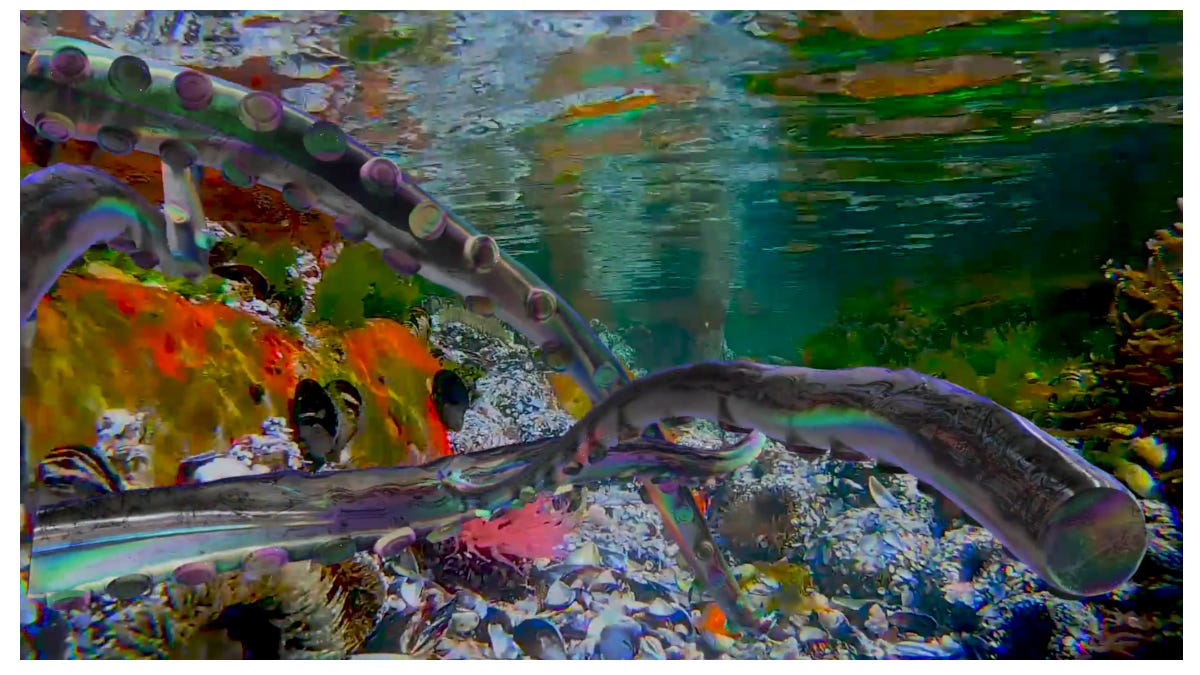
Technocracy is the form of government of bourgeois ideologues who would turn society into a mass that can be manipulated (into an inanimate object). Technocracy is dangerous because it works.
~ Vilém Flusser, The Gesture of Searching
We’re diving right in, because this one’s from the deep end. You’re reading ABSTACKTION, and today’s topic is Vilém Flusser’s The Gesture of Searching. Appearing in his Gesture’s collection, it’s one of Flusser’s several treatises on our shifting worldview caused by “a crisis of knowledge.” Nowadays, we can all feel the reality of that crisis, but do we know where it’s headed?
Vilém thinks he does, so let’s find out.
The Background:
Flusser tends to be described as a theorist or philosopher. More specifically, he embraced a branch of thinking called phenomenology, which, in my characteristically simplistic style, might be described as: the project of integrating subjective and objective experience. Phenomenologists ask, “What is the shared truth of existence when each person is living their own life in an individual way?”

Much of Flusser’s early philosophy was composed in response to Martin Heidegger, a thinker who left behind a pretty mixed bag of life’s work.
In 1927, Heidegger published Being and Time, where he solidified phenomenology in academic history by introducing the notion of Dasein, or “being in the world,” which is fundamental to all of Flusser’s writing. We find Dasein woven tightly into Flusser’s Gestures collection, all the way from relatively surface-level, unattributed allusions, and down to the book’s core foundational concepts and questions.
More than unfortunately, in 1933 Heidegger enthusiastically joined the Nazis. He gave many impassioned speeches from a position of academic power on the righteousness of Hitler and Nazism, and he never publicly commented on the holocaust after the war.
Flusser was Jewish, born in Czechoslovakia in 1920, and his entire family was killed in Buchenwald and Auschwitz. Flusser escaped first to England, and then to Brazil where he would conduct the bulk of his studies. He later fled back to Europe, relocating innumerable times (mostly between Brazil, France, and Germany) in a life marked by groundlessness and migrancy. His relationship with Heidegger is a fascinating topic for another essay, but for now we’ll put a pin in Heidegger’s Dasein: a descriptive term for the existential circumstances of conscious life that connects directly to Flusser’s intimate experience of human evil, loss, and dispossession. It will be relevant later.
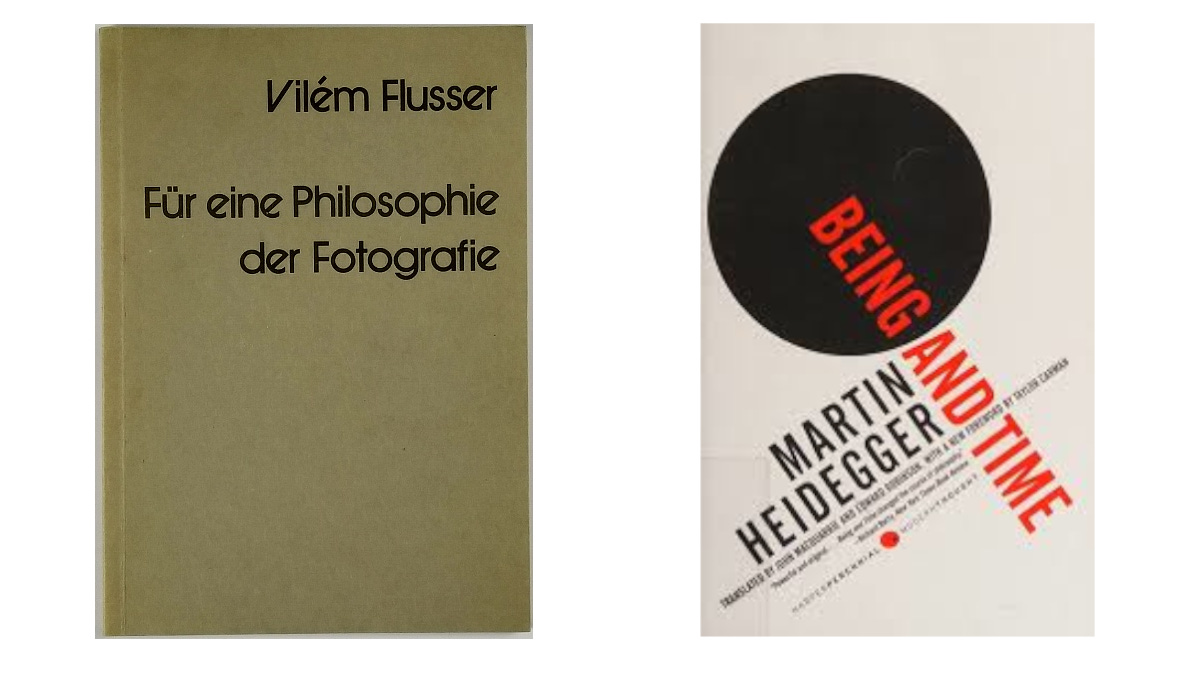
Flusser’s most discussed work today is probably his 1983 book, Towards a Philosophy of Photography. There he proposed that the language of text replaced the language of iconography in the Late Medieval and Early Modern eras. Instead of pictures themselves communicating in their own visual language, images became meaningful only insofar as they could be described through text. This era was obsolesced, in Flusser’s view, by the invention of the camera, which replaced the language of text with something he called “the Technical Image.”
For Flusser, Technical Images are images composed more by machines themselves than by the humans who operate those machines. In a world of image-making apparatuses, Flusser suggested, human artists—with some exceptions—would become “functionaries” of machine code. This divinatory premonition of the (at the time) far-off troubles of social media continues to startle readers to this day, aging Flusser’s writing into greater and greater relevance, especially in the field of media theory.
Across his career, Flusser’s philosophy and criticism proved diverse, highly unconventional (anti-academic, direct, unapologetic, poetic), sometimes notably weird (as in his book on the vampire squid), and penned in all four of his fluent languages (Portuguese, German, French, English). These factors made some of his work a little tricky to hunt down for American readers until lately. The essays in Gestures are one example.

What are Gestures?
Flusser’s Gestures was published posthumously in 1991 as Gesten: Versuch einer Phanomenologie, which was close on the heels of Flusser’s untimely death by car crash. Although several translations were published in the interim, an English edition was not available until Nancy Ann Roth’s 2014 translation.
A “gesture,” to Flusser, is a concept so comprehensive as to be almost indescribable. One capacious definition might be: a thing someone does in the world. Flusser writes, “A general theory of gestures would be a means of orienting ourselves in the circumstances in which we find ourselves with respect to things and people” (161).
But the idea’s breadth shouldn’t eclipse its importance. Flusser believed that any meaningful philosophy attempting to tackle the nature of our shared reality should stem from simple observations about the types of things that human beings seem to do while we occupy time and space.

The book is divided into sixteen essays, each analyzing a specific gesture. In order, the essays are:
Writing
Speaking
Making
Loving
Destroying
Painting
Photographing
Filming
Turning a Mask Around
Planting
Shaving
Listening to Music
Smoking a Pipe
Telephoning
Video
Searching
Surely, some of these will catch readers more off guard than others. I’ll leave it to curious readers to discover what Turning a Mask Around means, or why Flusser thinks Shaving is equal in significance to Writing and Speaking. But for me the last essay is especially resonant.
Flusser thinks “Searching” might be humanity’s most essential activity, and it certainly feels like the word could describe today’s cultural mode. Much more so than, say, finding. Amid the chaos and disinformation of the internet era—and even in the era of advertising and TV news—we are always puzzling for the truth, always looking for answers, always wondering “why” but never finding out, always getting shoved forward by the pace of the present to more events without straightforward causes. Beyond this, we are always and forever “searching something” on Google, and whether or not “chatting” with an artificial intelligence will overtake that reflex remains to be seen. But if it does, that would only leave us to search in new places for new answers to new problems.
For these reasons and more, Flusser’s essay on searching posits the theory that this particular gesture comes before everything else that we consciously do as individuals and as a species. Put simply, “searching” is the model for all our other gestures. Flusser also believes the way we search is drastically changing, and this is a pretty serious situation. If we change the way we search, Flusser proposes, then everything else is going to change, too.
Does this lab coat make my perspective look objective?
In The Gesture of Searching, Flusser describes a sort of one-two punch he believes humanity is reeling from. First, as mentioned, he claims the gesture of searching essentially determines every other human action. Second, Flusser writes that humanity’s gesture of searching is currently based on the “ideal of pure research.” By this, he means (if not so much in practice, but in theory) the scientific method.

According to Flusser, this has been the status quo since roughly the middle of the sixteenth century, when a confluence of political and philosophical upheavals turned humanity’s core interests away from “god and the soul,” and we began to think about “nature” instead.
One of Flusser’s favorite rhetorical techniques is suggestion, and he spends some paragraphs early in this essay suggesting, without really explaining, a narrative of The Enlightenment that diverges somewhat from what we might have studied in American high school history classes. Loosely, his is a Marxist analysis of how secularization and technological developments, combined with the economic dynamics of feudalism, led to raw materials becoming “valuable,” which—through means you can research more on your own—led to the revolutions that overthrew Europe’s medieval theocracies. Flusser calls the class of people who came to dominate society after these revolutions “The Revolutionary Bourgeoisie.”1
For Flusser, the important characteristic of the Revolutionary Bourgeoisie is that, in their compulsion to extract value from nature in order to build wealth, they redirected humanity’s deepest thoughts away from what Flusser calls “interesting things,” like cathedrals and cosmology, onto “uninteresting things,” like plants and rocks.

While Flusser’s labeling might be slightly flippant, he doesn’t actually mean that nature is boring. He means that, with a religious or magical worldview, humanity saw ourselves as one small component of an intelligent universe in possession of its own “interests,” a world whose patterns and changes could be attributed to the divine will of God (or, in polytheistic/animist cultures, the godly will of the Divine). On the other hand, the scientific portrait of nature lacked a soul. Nature was no longer full of spirits, but full of objects, and we needed to become “objective” in order to understand them.
If there are any twitchy Anthro majors out there, please don’t panic. Flusser does not want to “go back.” This is not an essay on re-enchantment or atavism. He’s headed towards a stranger conclusion. Flusser writes that in the quest for objective scientific knowledge, humanity assumed the role of a transcendent figure; a separate, powerful being, hierarchically superior to inanimate nature. “Compared to things like stones and stars, a human being is like a god” (149).
This is one of several borderline sarcastic claims Flusser makes throughout the essay. He almost definitely isn’t trying to imply that any particular individual goes through life genuinely feeling like a god who reigns over the inert universe beyond the borders of their skin (well… a few examples might spring to mind). But Flusser is simply suggesting that if we seek to learn about “stones and stars” through reason alone, then we have to stand metaphorically “above nature” and interpret the world as if it were a diagram of itself, as if our own surroundings were somehow withheld from us, obscured and hidden, until the time comes that we finally grasp them through language and mathematics. It is this mental model of nature, this diagram/blueprint/formula, that Flusser refers to as the ideal of “pure research,” the guiding principle for our modern methods of searching, and the basis for most of humanity’s other patterns of thought and action.
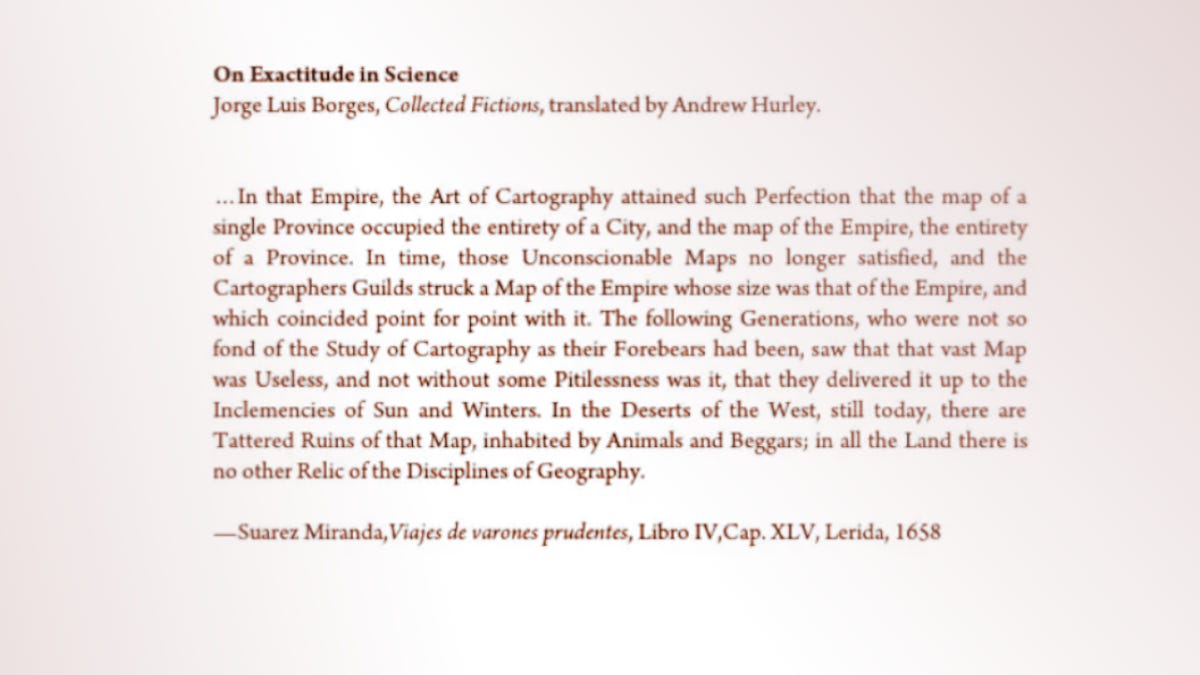
The average scientifically minded man, Flusser says, operates under the spell of a constructed fantasy. “Behind the confused numbers of nature, he will find a simple algorithm” (149). Flusser believes that we have come to perceive reality as a sort of baroquely encrypted zone. By seeing the world through a schematic lens, we’ve developed the sense that spacetime is a massive and complicated structure—a house, maybe. We were born there and rarely get the desire to go outside. We try to care for it and leave the place spiffy for our offspring. And to do that, we need to understand the plumbing, the wiring, the electrical. We believe that the universe, like a house, was built at some specific date (Big Bang), and it ages in a more or less predictable manner (entropy). We also suspect, like we have observed of our pets and peers, that the universe will die one day. But until that day comes, it’s up to us to keep the place in order.
Thanks to the convincing efforts of twentieth century environmental thinkers, even those who embrace modernity have largely come to conceive of themselves as part and parcel with nature. But our tendency to imagine reality as a kind of object that surrounds us—an object that is freighted with a history, a structure, a physics, and the potential to one day be described in maximally vivid detail—has proven unshakable.
Nonetheless, Flusser quickly concedes that our structural conception of nature is extremely useful. Tons of scientific discoveries have resulted in major boons for the whole world. Pure research—when treated as a method, a technique, an invented tool to achieve specific goals—is worth practicing and at times even celebrating. But a frightening issue with our fantasies of objectivity, Flusser explains, is that we frequently treat scientific research as a sort of replacement for thought, and this has caused humanity to make brash, short-term conclusions based on nascent and flawed methods.
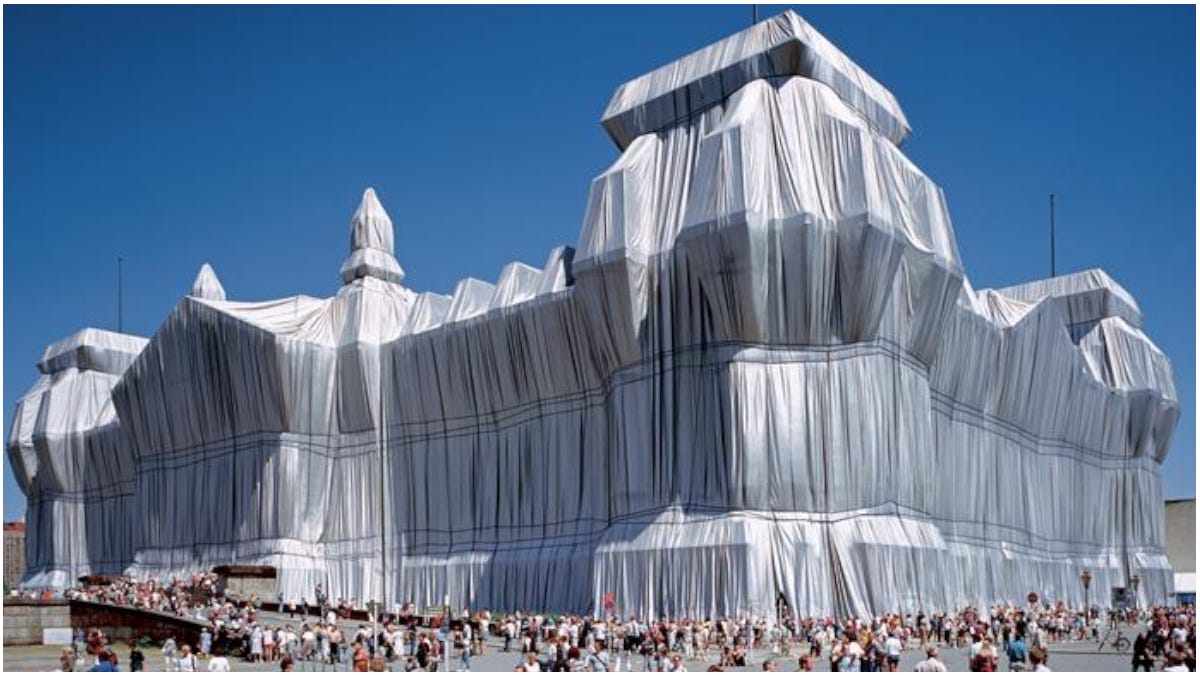
According to Flusser, the issue comes to a head when, following the protocols of objective science and spurred on by its history of material rewards, powerful figures have treated “subjects” (or: entities experiencing subjectivity) as though they were “objects.” Cited examples include, “animate beings, the human mind, and society” (150).
The proposal is not that we should cease all practice of medicine or psychology or sociology, but just that taking up an objective position in these fields is not achievable. Nowadays, reasonable people will generally admit that certain research practices, like scientific racism, while taken de facto in their time, were truthfully nothing more than arms of political influence. “Findings” were presented only in service of beliefs harbored by particular researchers, who in turn understood their world through the subjective circumstances of their imperialist cultures. Flusser—probably reminded of the people who slaughtered his family—refers to these types of researchers as “criminals” (as opposed to the types of criminals who we study, with varying degrees of explicit prejudice, in the still thriving science of “criminology”).
Even at the most extreme end of dehumanization, eugenics, though (mostly) disavowed today, cannot be erased as the scientific precursor to modern genetics, the difference being a presumed shift in our motivation for doing the research. The “ideas that come from eugenics are woven into the fabric of our educational system,” and genetically modifying other species for agriculture and entertainment remains a revered modern achievement.2

Flusser doesn’t specifically elaborate on all of these examples, but his extreme concision makes a bit more evidence helpful in framing the essay. His gist is that even in extreme cases of wrongdoing by way of heinous scientific practices, we tend to move forward as if the research itself is protected from judgment by an armor of objectivity.
Other Anything
At this point Flusser has thoroughly challenged the notion that human subjects can truly observe the objects of their research from a tabula rasa POV, as if the world were a work of art and we a disinterested observer, rating it one through ten. When we try to act this way, we invite peril. “A subject is always the subject of some sort of object,” Flusser writes, “and an object is always the object of some sort of subject; there is neither subject without object nor object without subject” (151).
Popularly, quantum physicists cite the observer effect as evidence to this point, but Flusser doesn’t need the demonstration to see that “mere observation” is a logical impossibility. Pure research, then (which Flusser acquiesces is not really what many practicing scientists do today), reveals itself as a kind of Sisyphean performance where we pretend with all our might to learn something new, knowing all the while that any acquired knowledge is only applicable to the artificially sterile system of the research itself. In reality, “pure research” is safely sheltered in science’s zone of objectivity, and it may or may not apply to the world as it really exists.
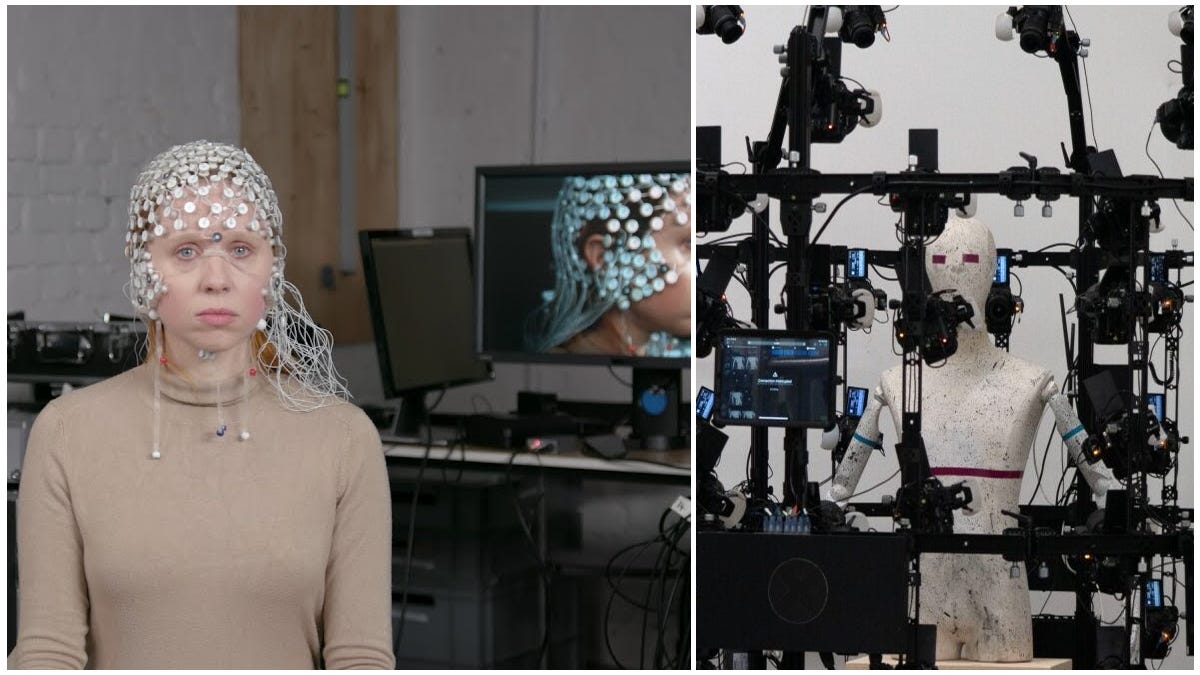
But for all his critique of modern methodologies, Flusser is not anti-science. In fact, it was inside of scientific arenas that the ideal of pure research was first obsolesced. Contemporary science has in large part—through quantum theories and collaboration with other disciplines—integrated an understanding of subject-object interconnection. But Flusser is concerned that humanity’s foundational gesture (the gesture of searching) has remained problematically unaffected by the newfound scientific acceptance that we live in and create this world together, with each other, and with the infinite forces of nature that are not separate from us.
On the contrary, he points out how we continue to “treat society like an ant colony” because technology continues to advance, giving off the impression that “pure research,” whether or not we cognitively grasp its delusional character, gets the job done. As long as “technocracy works,” Flusser says, then we will not rest until we have turned all of the living phenomena we encounter into objects of utilitarian study. “The song of a bird becomes an acoustic vibration, and pain becomes a dysfunction of the organism” (153). Flusser sees a tragically real destruction in this transformation, and he is worried about the repercussions of entering into subject-object relationships with other minds, or other anything.
Binge-Watching the Detectives
At the heart of all this lies the thoughts, emotions, assumptions, and actions of a specific central archetype, someone Flusser calls “a thoroughly peculiar, suspicious subject, ‘the researcher’” (152). To understand who Flusser is talking about when he talks about “the researcher,” it might help to revive his descriptive technique of “suggestion.” It’s probably inaccurate to say that he means the term metaphorically, yet he certainly isn’t invoking the limited category of students and professionals who would traditionally be considered “researchers.” Instead, Flusser suggests that several ideas can be associated with the term.

One way Flusser means researcher would be as the overarching system of dominant thought in bourgeois society, where all actions and ideas can be traced back to the ideal of pure research. Another way would be as any individual who not only exemplifies, but is at all affected by that form of thinking, which is probably everyone. Another way would be closest to the literal definition of the word, which is the technologists and technocrats who enforce, intentionally and by accident, in doctrine and in deed, the persistent dominance of the bourgeois worldview. My impression is that Flusser welcomes readers to interpret “researcher” in any of these ways, and that we strive to understand them as one hybrid concept.
Driven by a system of thought that Flusser asserts is fundamentally inconsistent, the more the researcher learns about his objects of study in the context of research, the more he thinks he understands those objects in the context of a broader reality.
Through pure, systematic experimentation, the researcher is vulnerable to all of the distortions we have already reviewed. He tacitly assumes that reality as a whole can eventually be grasped by explaining all of its individual components in isolation. Even if the researcher studies a “system,” he turns the system into an object to study. Even if the researcher intellectually recognizes the impossibility of truly explaining each discrete element of the universe, he nonetheless believes that, prior to that impossible achievement, at least some things can be fully understood on their own. Flusser calls this habit of the researcher “progressive objectification,” and he suggests that it “accelerate[s] the loss of concrete reality” (155).
In order to achieve this progressive objectification, the researcher inadvertently generates a whole simulated world in their head. In this imaginary model of reality, only the variables necessary to the research are included. This is how pure research winds up answering questions that were never really about the world in which we live, but about a model world populated by isolated objects that have been taken out of context.

This model world is almost like a video game. In this game, everything from the real world is there, but one essential quality of existence (we might call it nebulousness, or the lack of a boundary between form and perception) has been replaced by something enormously different: a dialectical “law” of subject-object relationships. Flusser wants to question the relevancy of discoveries that happen in this purely hypothetical realm.
“[I]s this context of objects of which the researcher speaks, separated from concrete reality, actually the world we know and wish to change? Is it not a fantastic, unimaginable world? Rather than finding something, hasn’t the researcher lost everything?” (154). This is the crisis motivating Flusser’s essay. We know that pure research is a world-destroying project, but Flusser isn’t one to pose a problem without a solution.
I should warn you…
The end of Flusser’s Searching essay represents some of his most ambitious writing, and it’s totally fair to react to it as inaccessibly theoretical. He appears to be attempting a fairly ridiculous stunt of philosophy to take place over just a couple of pages. But Flusser is not a self-conscious figure (he was rarely photographed not smoking a pipe), and he’s happy to drift out on the tides of his cogitations. What we get is a diagrammatic draft of a possible alternative ontology, a new way of being in the world for a new era of humanity, a new gesture of searching that “no longer understand[s] the world as an object of manipulation or human beings as subjects that manipulate” (155). He also gives this form of research a cool new name: Telematics.3

The World as Chuck. E. Cheese Ball Pit
Flusser believes that both bourgeois research and this new, revolutionary research have different Utopian goals. They work toward different ideal results. The Utopian endpoint of bourgeois research was to eventually develop “technology that manipulates the whole objective world” (157). This might sound like Sci-Fi-evil-genius stuff, and it kind of is, but Flusser is flexibly using the term “technology.” While it could mean a planetary supercomputer that controls every aspect of the global environment through real-time AI processing, it could just as easily mean something like an infinitely detailed encyclopedia.
On the flip side, the perfect-world result of our new, revolutionary research would be to “approach […] one another with the purpose of gathering possibilities” (158). Where bourgeois research sought knowledge, explanations, and greater objectivity so that we could glean the value of the material world and grow more capable of executing our will upon it, this new research seeks to encounter more of the universe around us and “transform the approaching possibilities into freedom” (157). For Flusser, this is a matter of separating the “gesture of searching” from pure research, so that searching becomes not a gesture of simple thesis and antithesis, but “a gesture of living.” Most succinctly, he explains that our gesture of searching is changing “from digging down for reasons to reaching out broadly for attractive possibilities” (159).

In a trippy turn, Flusser suggests that if we want to successfully re-imagine our role in the world, we also must re-imagine the way we live in spacetime. No longer can we exist “above the world,” reading the blueprint of nature, imagining when it started, imagining how it will end, imagining what things would be like if we were really a part of it. Instead, we have to recognize our lives as something like experiences embedded in the “dynamic structure” of reality itself. Flusser suggests that our gestalt awareness of being alive, or Dasein, is progressively generated at the rippling brink of our perceptual horizons.
According to Flusser, a model of the world that we are actually a part of, yet are always, paradoxically, looking out into, could be described like this:
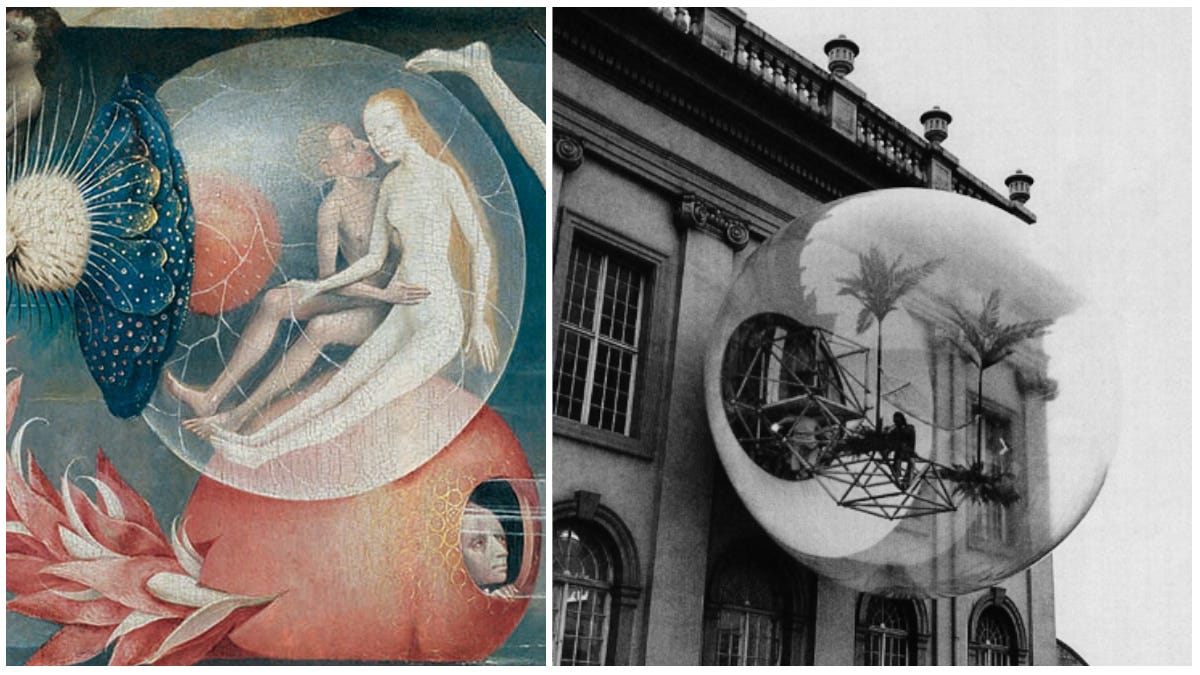
We exist in the center of a sphere. Inside the sphere is all that can be sensed about the world, including our bodies, thoughts, and all the phenomena we encounter and become aware of. Outside the sphere is all that cannot be known at any given time. The future is beyond the edge of the sphere, because anything that hasn’t happened yet cannot be known. Also out there beyond the sphere is where certain parts of the past can be found. Those parts are the ones that we have either forgotten about or never knew. But the sphere does not have as clear a border as this might imply. There is simply a distance in all directions past which we cannot perceive things (or recall things), and that is what Flusser calls “the horizon.”
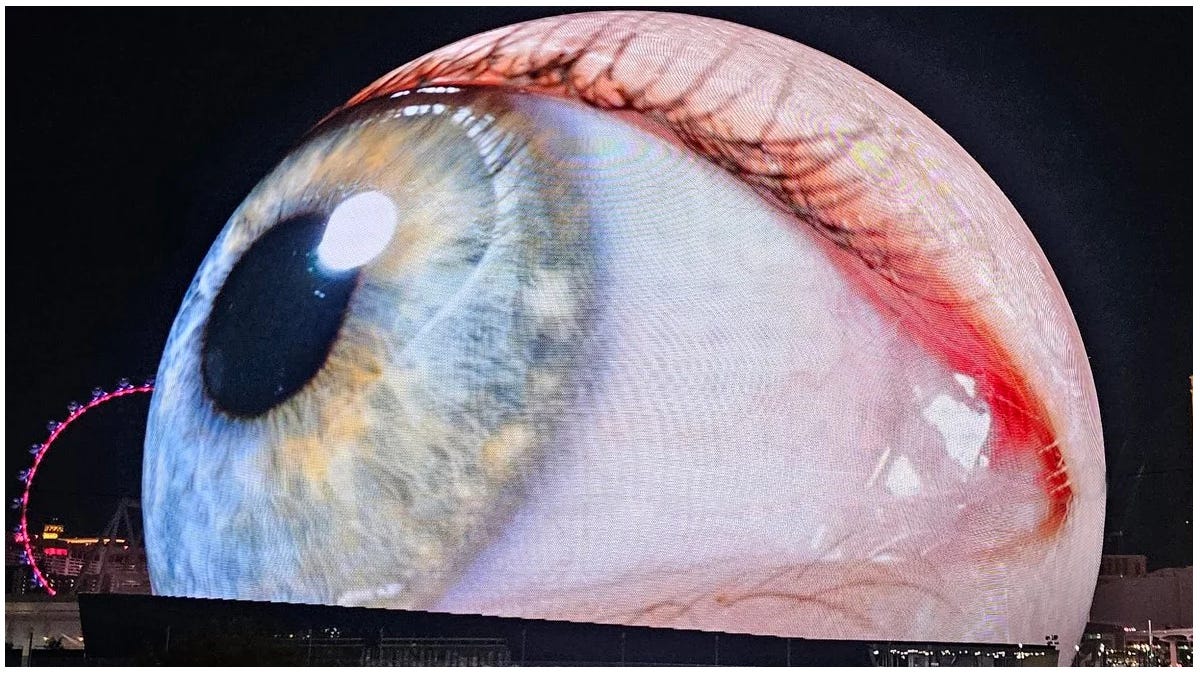
Flusser asserts that we are always in a state of “beckoning to the distance” (157), wanting most of all to gain freedom by expanding our horizons to encompass more and more of the world. This practice—our new way of searching, and therefore, of living—is what Flusser suggests might be dubbed “Telematics” (tele: “far, or distance”, and matic: probably for Flusser something like “learning”). Because our spheres include other people and their spheres too, the act of Telematics is a mutual endeavor. The more your sphere grows, the more the spheres of the people inside it also grow. Presumably, they are all “beckoning to the distance” like you, seeking freedom and new experiences.
Flusser uses “freedom” to mean something like not subject to fate. If your horizon is not very far away, you won’t be aware of very many possibilities for living differently than you already do. If the unseen voids of the future and the forgotten past have closed in too tightly around you, the current state of things will feel like an inevitable set of conditions. But as your sphere grows, the future is transformed into new sets of phenomena. Opportunities emerge, change becomes possible, and life grows less determined.
Just Lose It
This globular sketch of humanity’s revolutionary consciousness is pretty much where Flusser drops the essay, leaving readers to interpret on their own the “epistemological, ethical, and aesthetic consequences” (155). These, he seems to imply, are no laughing matter, but Flusser only suggests a couple (mostly epistemological) outcomes concerning non-linear causality and the interpretation of history. I’ve already gone on too long, so you can check those out in the essay or brainstorm your own predictions for those categories.
I am still compiling my own mental list of questions that Flusser’s revolutionary worldview might posit, but I wrote about this essay specifically in the context of ABSTACKTION because I agree with Flusser that our current crisis has already borne serious aesthetic consequences. The art we make is, as always, changing. But the zeitgeist and its images are definitely interpolating around us faster than per usual. I am overcome daily by the woozy inkling that our presumed theater of public discourse, the sensory interface with which we understand the world as anything other than routine, is—to employ an absurd euphemism only a truly old-school researcher could stomach—sustaining a rapid unplanned disassembly.
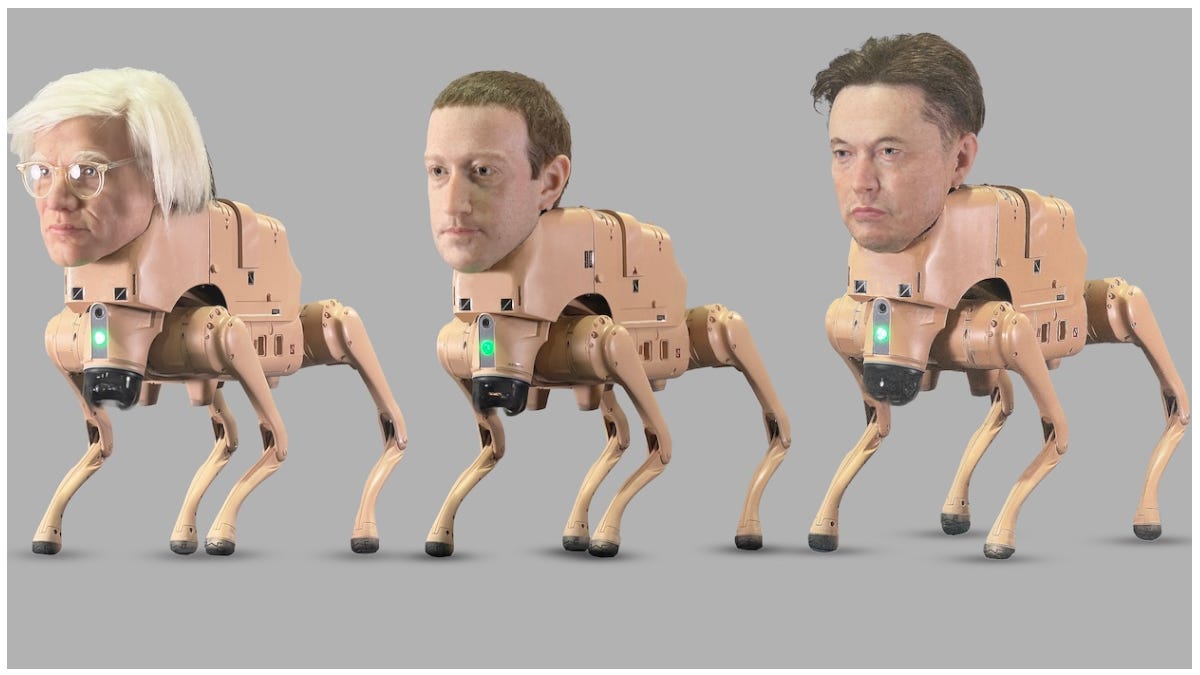
Flusser reminds us several times in the Searching essay that he’s writing about a crisis. How did we get here, where are we going, and what will survive the transition? We know that not everything will. That is the nature of a crisis. Flusser believed that we were in the process of losing something, specifically a certain framework of knowledge, and this loss would become a crisis when we collectively realized that it was gone forever.
If we are not there yet, I think it’s fair to risk a little hysteria and call it imminent. The pervasive slop is darkening our sights. The preeminent fantasies of fascism are ever freer to flourish in an algorithmically mediated environment where individuals and communities rely on technology, not only to satisfy our desires, but to populate our closely governed minds with the impulsive hungers that animate us in the first place.
Flusser doesn’t take time in his essay to narrate what the “crisis of searching” really looks like for living individuals, but I think everyone today could come up with a few examples. I sleep less than I should. I drink a little more caffeine than I should. I read a little more narrowly than I used to. I momentarily wonder if a new para-psychedelic pharmaceutical could improve my mood. When I find something genuinely inspiring, I am bombarded with thousands of its iterations (some real, some “generated” by a complicity of blue-chip corporations), until the platforms prove their swift dominance over coherence. I give over all my learning to content, and content teaches me nothing.
Enjoy your meal, Substack. I’m still alive; the soup is safe to eat.
But things do not have to be this way. In fact, they won’t be. In the often-admired opening sentence of The Haunting of Hill House, Shirley Jackson writes, “No live organism can continue for long to exist sanely under conditions of absolute reality; even larks and katydids are supposed, by some, to dream.” In this most renown novel of Jackson’s, Hill House (a haunted mansion) is invaded by paranormal researchers touting cases of scientific instruments they claim will either prove or disprove that the titular structure is home to otherworldly squatters. It’s a horror story, so it’s just one particularly good example of many where an author pits the fecklessness of her rational characters against vaguely Nietzschean paradoxes of non-reason, and readers reap the thrills.
The house, which Jackson also diagnoses in the opening paragraph as “not sane,” manages to summarily dissolve the trust between its occupiers. Without intention, and without motivation, without “sentience” or “intelligence,” Hill House renders human-to-human communication all but impossible, and it robs the cast of pseudo-scientists of their presumably libertine dreams.
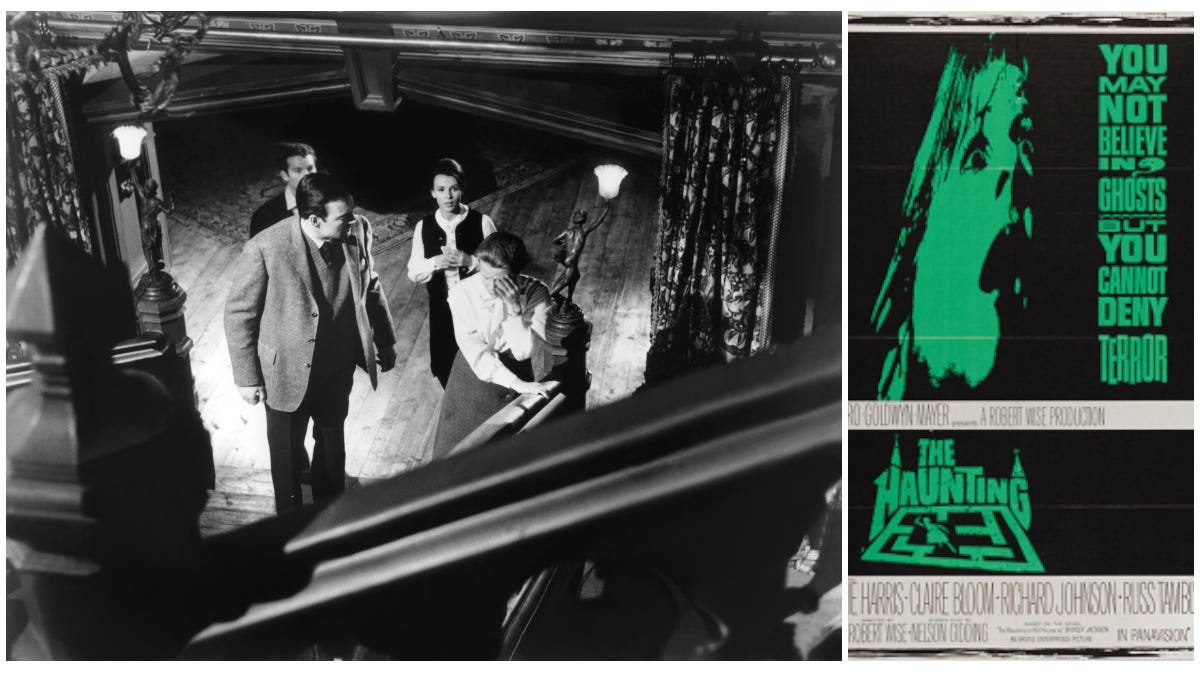
Haunted house stories, along with other genres of horror, are tales of humans coming to terms with how little they understand about their surroundings. What these metaphors offer that is missing from Flusser’s essay is the calamitous experience of epistemological crises. Humans have gone through them before. Ours won’t last forever. But in the midst of crises, insanity and horror are uncovered in all kinds of unexpected places.
In Flusser’s view, our crisis is in large part one of technology. In the past, when some new vanguard form of media has threatened to destabilize the order of our world (in Flusser’s time: the turn to technical images. In ours: AI and the gurgling morass of online content), it’s often announced as a sort of trembling achievement. But in The Gesture of Searching, Flusser manages a rare note of clarity. We had only feigned to order the world with industrial-era science. Revolutionary tech—be it AI, TV, radio, the camera, tubed paint, the printing press, or basic symbolic language—for all its pomp, really only makes one simple gesture: it reintroduces us to reality. Then, reliably, we lose it.
‘til the next
Thank you for reading. Look out for the oncoming ABSTACKTION, episode 4, which will respond to Claire Bishop’s Disordered Attention. That article will be grounded in more conventional art criticism, but it won’t be entirely disconnected. In Disordered Attention, Bishop trains a similar, “search-based” lens on our contemporary distractable spectatorship. It’s sure to be both fun and brimming full of contemporary artists who are better than Beeple.
It’s probably worth a quick note that Flusser is not an orthodox Marxist. He often points this out.
I am aware of Mendel, but his role as an actual practitioner of pure research, or is as a sort of mythic father of gene science, does not clear up the fraught relationship between objective analysis and institutional power. And for objections as to the severity of the issue, the relatively recent history of eugenics in America has been, in any sane evaluation, completely erased from US education in one of the most under-discussed examples of egregious state propaganda we have. Eugenics was, to many powerful and still-extant institutions, the most promising and well-funded field of research in pre-WWII America, and of course it didn’t shut off like a light switch on VJ Day. Related to this Substack series (and Substack itself) you can find a deep dive in the explicitly eugenic origins of the modern tech industry in Malcolm Harris’ Palo Alto.
Flusser acknowledges, in the essay, the issues with presenting just another diagram: “[I]sn’t this belief in the other a new form of the old Judeo-Christian and even “humanist” and Marxist belief? Of course. But that is not what is interesting. What is interesting is the concern with a new form” (159).